 ultimate-guide
Golf Club Fitting for High Handicappers: The Complete Guide
Table of Contents
- Why Golf Club Fitting for High Handicappers Actually Works
- The Difference Between Custom Fitting and Off-the-Shelf Clubs
- Benefits of Custom Golf Club Fitting
- What to Expect at a Golf Club Fitting Session
- Golf Club Fitting Cost in the UK
- Common Misconceptions About Club Fitting for High Handicappers
- How Swing Consistency and Technology Improve Your Results
- Choosing Between Used and New Fitted Clubs
- Frequently Asked Questions
Last Updated: October 2, 2026
Why Golf Club Fitting for High Handicappers Actually Works
Golf club fitting for high handicappers isn't a luxury reserved for tour professionals. It's the most direct route to measurable improvement when your swing consistency is still developing. The difference between playing with equipment matched to your swing DNA and playing off-the-shelf clubs is the gap between fighting your gear and having it work for you.
High handicappers face a specific problem: inconsistency. Your swing path varies. Your clubhead speed fluctuates. Your contact point moves around the clubface. Standard clubs are built for a theoretical "average" golfer who doesn't exist. Custom fitting addresses this head-on by measuring your actual swing, not an imaginary one, then building equipment that forgives your real miss-hits and launches the ball on a trajectory suited to your tempo and release point.
At Major Golf Direct, the ones who get fitted see tangible changes: tighter ball dispersion, more consistent distances, and, most importantly, lower scores. Not because fitting is magic, but because it removes the friction between what you're trying to do and what your equipment allows you to do.
The data supports this. Launch monitor technology reveals exactly what's happening at impact: your smash factor, spin rate, launch angle, and face angle. Armed with those numbers, a PGA Professional can recommend shaft flex, loft adjustments, grip thickness, and club length that match your mechanics. You're not guessing anymore. You're building on evidence.
The Difference Between Custom Fitting and Off-the-Shelf Clubs
Off-the-shelf clubs come in standard specifications: fixed loft, standard lie angle, one shaft flex per model, grip thickness selected by the manufacturer. They're engineered for consistency in production, not for your swing.
Custom fitting starts with measurement. A launch monitor captures your swing mechanics across dozens of shots. Your clubhead speed, swing path, face angle at impact, and dynamic loft all get recorded. From there, a PGA Professional analyses the data to identify what's limiting your performance. Is your launch angle too low? Does your lie angle cause the clubface to open at address? Is your shaft flex creating lag issues in your transition?
The adjustments that follow are specific to you. Your irons might need a stronger loft to compensate for a slower clubhead speed. Your driver might benefit from a draw-bias weight distribution to square the clubface quicker. Your shaft flex might need to be softer to promote better launch conditions. Your grip thickness might need adjustment if your hand size or pressure is affecting your release point.
Off-the-shelf clubs assume you'll adapt to them. Custom fitting assumes your equipment should adapt to you. For high handicappers still developing swing consistency, that difference is decisive. You're not fighting the clubs while you're learning the swing.
Benefits of Custom Golf Club Fitting
Swing consistency and ball dispersion
Swing consistency doesn't mean a perfect swing. It means your misses follow a pattern. A tight ball dispersion, where your shots cluster in a defined area rather than scattering randomly, is the foundation of scoring improvement.
When your clubs are fitted to your actual swing mechanics, ball dispersion tightens immediately. Your shaft flex matches your tempo. Your loft and lie angle align with your swing path. Your launch angle matches your clubhead speed. The result is more predictable shot patterns. You know where your miss is going. You can manage it. You can score around it.
High handicappers often see their best-shot distances improve modestly, but their worst-shot distances improve dramatically. That's the real benefit. The gap between your best and worst shots narrows. Consistency follows.
Shaft flex and launch conditions
Shaft flex is the most misunderstood fitting parameter. Many golfers assume stiffer is better. It's not. Shaft flex should match your tempo and swing speed.
A shaft that's too stiff for your swing speed resists loading during your transition. Your release point gets delayed. Your launch angle drops. You lose distance and forgiveness. A shaft that's too soft allows the club to flex excessively, creating lag issues and inconsistent face angles at impact.
The right shaft flex for your swing creates optimal launch conditions: a launch angle that matches your clubhead speed, a spin rate that promotes carry distance without ballooning, and a consistent ball flight from shot to shot. Launch monitor data makes this visible. You see your spin rate, your launch angle, your carry distance. Adjust the shaft, and you see the data change in real time.
For high handicappers, getting shaft flex right is often the single biggest performance gain from fitting. It's also the most common area where off-the-shelf clubs miss the mark.
What to Expect at a Golf Club Fitting Session
A professional fitting session at Major Golf Direct follows a structured process designed to gather accurate data and make informed recommendations.
TaylorMade Golf Qi4D Max Driver 2026 →
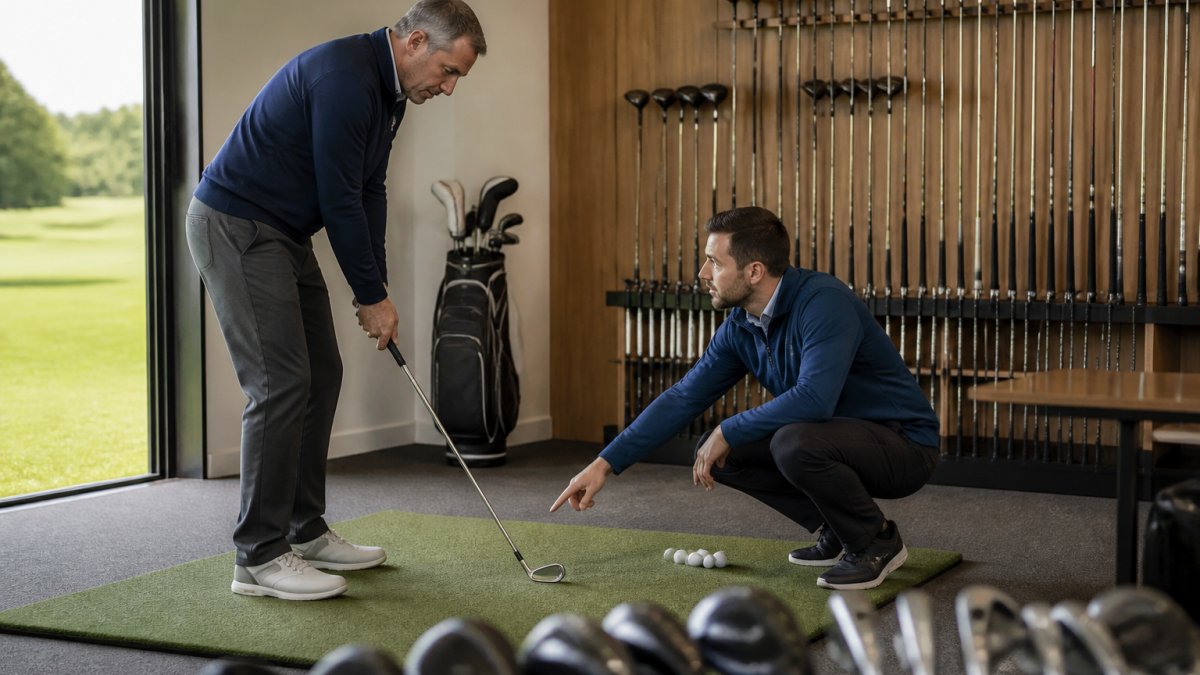
You'll start with a brief conversation about your game: your handicap, your typical misses, your goals, and any physical limitations that might affect equipment selection. This context matters. A golfer fighting a slice needs different recommendations than one struggling with distance. Aligning your equipment with these specific tendencies creates the necessary foundation for lowering your handicap through more consistent ball striking.
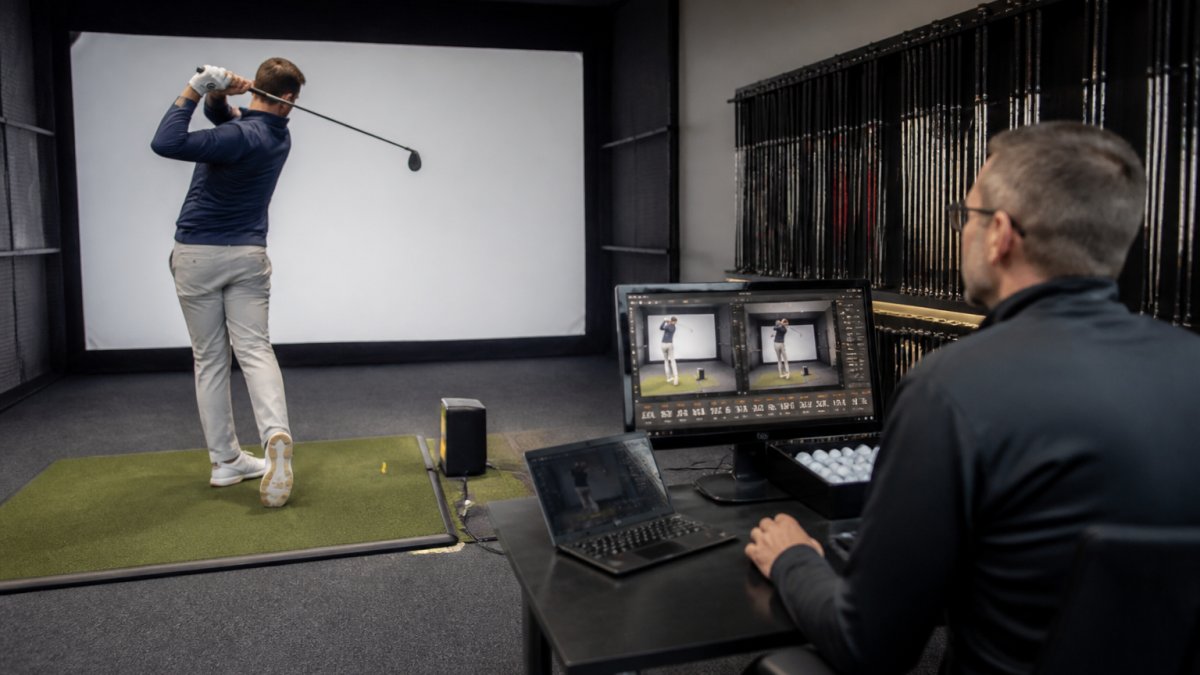
Launch monitor data and swing analysis
The core of the fitting is launch monitor analysis. You'll hit shots with your current clubs while a Trackman 4 system captures your swing data. The monitor records your clubhead speed, swing path, face angle, dynamic loft, attack angle, smash factor, spin rate, launch angle, and ball flight.
This data is objective. It removes guesswork. Your PGA Professional reviews the numbers with you, explaining what they mean for your performance. If your launch angle is too high, you're losing distance. If your spin rate is too low, your ball is ballooning. If your face angle is inconsistent, your dispersion is suffering.
The professional will then have you hit shots with demo clubs featuring different specs: varied shaft flexes, different loft angles, adjusted lie angles. Each time, the launch monitor captures new data. You'll see how a softer shaft changes your launch angle. How a stronger loft affects your distance. How an adjusted lie angle impacts your ball flight.
Club selection and adjustments
Once the data identifies the right specs for your swing, club selection follows. At Major Golf Direct, our PGA Professionals recommend equipment from leading brands that match your fitting profile and your budget. You're not pushed toward the most expensive option. You're guided toward the clubs that fit your swing and your financial situation.
For irons, this might mean selecting a game-improvement model with a lower centre of gravity to promote easier launch. For drivers, it might mean choosing a head with draw-bias weighting to help square the clubface quicker.
Golf Club Fitting Cost in the UK
Custom fitting involves professional time, launch monitor technology, and demo equipment. It's not free. But the investment returns value through improved performance and reduced equipment waste.
Common Misconceptions About Club Fitting for High Handicappers
"Fitting is only for low handicappers." This is backwards. High handicappers benefit more from fitting because they have more room to improve. A scratch golfer's swing is already consistent. A high handicapper's swing is still developing. Fitted equipment that matches your current mechanics accelerates improvement.
How Swing Consistency and Technology Improve Your Results
The relationship between swing consistency and equipment is circular. Better equipment promotes more consistent results, which builds confidence, which promotes more consistent swings.
Choosing Between Used and New Fitted Clubs
The used-versus-new decision in fitted equipment is more nuanced than most golfers realise.
| Decision Factor | New Fitted Clubs | Used Fitted Clubs |
|---|---|---|
| Customisation | Full adjustment to your specs | Limited; existing specs only |
| Cost | Higher upfront | Lower; 40-50% savings possible |
| Warranty | Manufacturer coverage included | Limited or none |
| Technology | Latest innovations | 2-3 years old; still effective |
| Best For | Developing swings; first fitting | Consistent swings; budget-conscious |
Frequently Asked Questions
Is golf club fitting worth it for high handicappers?
Yes. High handicappers benefit significantly from fitting because inconsistent swing mechanics make standard clubs less forgiving. Custom fitting optimises shaft flex, lie angle, and club length to match your actual swing, improving ball dispersion and shot consistency.
How much does golf club fitting cost in the UK?
The investment in fitting pays for itself through improved performance and reduced wasted spending on unsuitable equipment. Major Golf Direct provides expert fitting using Trackman 4 technology, and the fitting cost is often waived with club purchases.
What should I expect during a golf club fitting session?
A professional fitting begins with swing analysis using launch monitor technology like Trackman 4, which measures clubhead speed, launch angle, spin rate, and ball flight. Your PGA Professional will assess your swing mechanics, handicap level, and physical characteristics. You'll test multiple club configurations, adjusting shaft flex, loft, lie angle, and grip thickness. The session concludes with recommendations tailored to your swing and budget, with a clear explanation of how each adjustment affects your game.
What benefits does custom club fitting provide?
Custom fitting delivers improved swing consistency through optimised equipment that matches your biomechanics. You'll achieve tighter ball dispersion, more predictable shot patterns, and better distance control. Fitted clubs reduce the penalty for off-centre hits through proper shaft flex and lie angle, building confidence.
Do high handicappers need different shaft flexes?
Yes. High handicappers often benefit from softer shaft flexes (regular or senior flex) because they typically generate lower clubhead speeds. The correct flex allows the shaft to load and unload properly during your swing, promoting consistent launch angles and better energy transfer. A launch monitor reveals your exact clubhead speed, allowing your fitter to recommend the precise flex that maximises your distance and accuracy.
Can I get fitted for used clubs?
Custom fitting can be applied to existing clubs, and adjustments such as lie angle corrections and grip changes can be made. The key is ensuring the equipment is in good condition and properly fitted to your swing, not simply buying affordable clubs off-the-shelf.