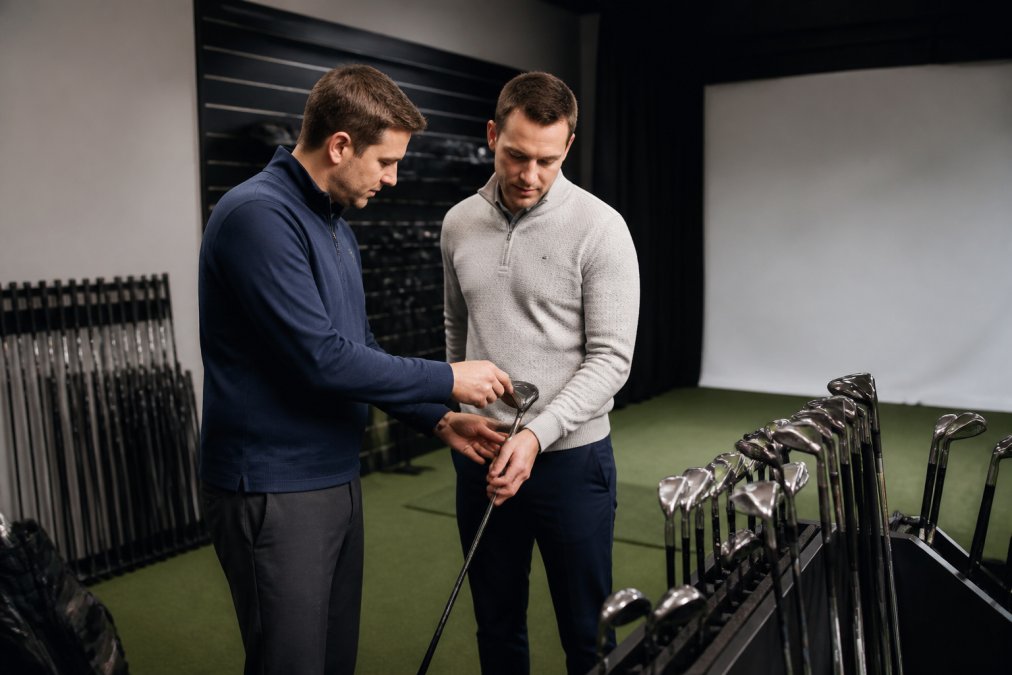
 how-to
How to Know If Golf Clubs Fit: A Complete Guide
Table of Contents
- How to Know If Golf Clubs Fit: The Basics
- Static Measurements: Wrist-to-Floor Distance and Club Length
- Dynamic Fitting vs. Static Measurement: Why Both Matter
- Key Performance Indicators That Reveal Poor Fit
- Critical Fit Parameters: Lie Angle, Shaft Flex, and Grip Size
- Benefits of Custom Golf Club Fitting
- Trackman 4 Golf Fitting: Data-Driven Performance Optimisation
- Budget-Friendly DIY Adjustments and When to Seek Professional Fitting
- Frequently Asked Questions
Last Updated: September 27, 2026
How to Know If Golf Clubs Fit: The Basics
The wrong clubs cost you strokes. That's not theory, it's biomechanics. When your clubs don't match your swing, your body compensates. You develop swing flaws. Your shot pattern becomes inconsistent. You hit it solid one day and thin it the next.
Golf clubs fit when they align with three core factors: your physical measurements, your swing characteristics, and your performance goals. Getting this right changes everything. Golfers who get properly fitted clubs report more consistency, better distance control, and lower scores.
This guide covers how to identify whether your current clubs fit, and what to do if they don't. We'll walk through static measurements, dynamic performance indicators, and the critical parameters that separate clubs that work from clubs that hold you back.
Static Measurements: Wrist-to-Floor Distance and Club Length
Static measurements form the foundation of club fitting. They're the baseline. But they're not the whole story.
Measuring Your Wrist-to-Floor Distance
Your wrist-to-floor distance is the first number any fitter needs. It determines your optimal club length.
Stand barefoot against a wall with your arms relaxed at your sides. Measure from the crease of your wrist to the floor. That's your wrist-to-floor distance. Most golfers fall between 28 and 38 inches.
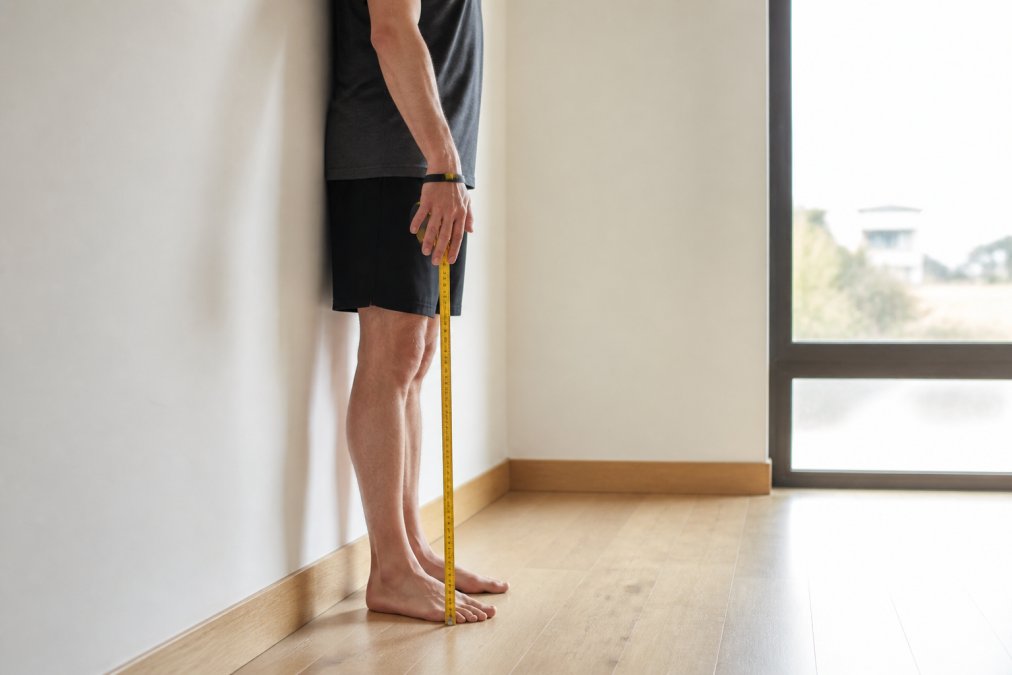
This measurement matters because it correlates with your ideal club length. Taller golfers with longer wrist-to-floor distances need longer clubs. Shorter golfers need shorter clubs. Standard length assumes a 5'9" golfer with a 34-inch wrist-to-floor distance.
If your wrist-to-floor distance is significantly different, standard clubs won't fit. You'll either reach too far or feel cramped. Either way, your swing suffers.
Understanding Golf Club Length by Height
Golf club length by height is the second static measurement. It's straightforward but often misunderstood.
Club length affects your posture, swing plane, and ability to strike the centre of the clubface. Too long and you'll struggle to hit the sweet spot. Too short and you'll hunch over, creating compensatory movements that throw off your swing mechanics.
Here's how length typically correlates with height:
Height | Wrist-to-Floor | Recommended Adjustment |
|---|---|---|
Under 5'3" | Under 31 inches | 0.5-1" shorter than standard |
5'3" to 5'6" | 31-33 inches | Standard or 0.5" shorter |
5'7" to 5'10" | 34-36 inches | Standard length |
5'11" to 6'2" | 37-39 inches | 0.5-1" longer than standard |
Over 6'2" | Over 39 inches | 1-2" longer than standard |
Standard club lengths are built for an average golfer. If you're outside that range, custom length matters. The Ben Sayers M8 package set comes in 1" longer options, which works well for taller players who need that extra reach without sacrificing control.

Dynamic Fitting vs. Static Measurement: Why Both Matter
Static measurements tell you the starting point. Dynamic fitting tells you what actually works for YOUR swing.
Many golfers get measured, buy clubs to spec, and still don't see improvement. Why? Because static measurements don't account for your swing characteristics, tempo, or the specific flaws in your motion.
Dynamic fitting uses technology, like Trackman 4, to measure what's actually happening when you swing. It captures clubhead speed, launch angle, spin rate, and ball flight. It shows your miss patterns. It reveals whether your lie angle is causing you to hit draws or fades. It identifies compensatory movements that are costing you distance or accuracy.
Here's the critical difference: static fitting answers "What length should you use?" Dynamic fitting answers "What settings will make you play better?"
Both matter. Static measurements prevent you from fighting your equipment. Dynamic fitting optimises your equipment to your actual swing. Together, they create clubs that work WITH you, not against you. Consistency in performance relies on this same principle of choosing equipment flex across every sport to ensure your gear responds predictably to the forces applied during play.
Key Performance Indicators That Reveal Poor Fit
If your clubs don't fit, your performance suffers in specific, measurable ways. These indicators tell you something's wrong.
Ball Flight and Dispersion Patterns
Your ball flight is the most honest feedback your clubs can give you.
Mizuno Golf Pro M-15 Forged Irons →
Clubs that fit produce consistent ball flight. You hit a 7-iron and it flies the same way every time. You know where it's going. You can trust it.
Clubs that don't fit produce erratic ball flight.
Identifying Compensatory Movements and Swing Flaws
When clubs don't fit, your body adapts. You develop swing flaws to make the clubs work.
Critical Fit Parameters: Lie Angle, Shaft Flex, and Grip Size
Three parameters control whether clubs fit your swing. Get these right and everything else follows.
The Importance of Lie Angle
Lie angle is the angle between the shaft and the sole of the club. It's measured in degrees.
Shaft Flex and Swing Speed Matching
Shaft flex determines how much the shaft bends during your swing. It's rated as L (Ladies), A (Amateur), R (Regular), S (Stiff), or X (Extra Stiff).
Grip Size and Hand Measurement
Grip size is often overlooked. It shouldn't be.
Grip size affects how your hands control the club. A grip that's too small forces your hands to work too actively. You'll have trouble controlling the clubface. A grip that's too large restricts your hand action. You'll struggle to release the club.
- Under 7 inches: Undersize grip
- 7 to 7.5 inches: Standard grip
- 7.5 to 8.25 inches: Midsize grip
- Over 8.25 inches: Oversize grip
Benefits of Custom Golf Club Fitting
Custom fitting isn't a luxury. It's an investment in your game.
Golfers who get properly fitted clubs experience measurable improvements:
- More consistent ball striking. Clubs that fit your measurements and swing characteristics reduce miss patterns. You hit the sweet spot more often.
- Better distance control. When your clubs are optimised for your swing speed and launch characteristics, you know how far each club goes. No more guessing.
- Lower scores. Consistency and distance control directly lower your scores. You hit more fairways. You hit more greens. You make more putts from inside your typical distance.
- Less frustration. Clubs that work WITH you instead of against you make the game more enjoyable. You trust your equipment.
- Injury prevention. Clubs that don't fit force compensatory movements. Those movements create strain. Proper fitting reduces injury risk.
Trackman 4 Golf Fitting: Data-Driven Performance Optimisation
Trackman 4 is the gold standard in golf fitting technology. It captures every detail of your swing and ball flight.
Trackman 4 measures:
- Clubhead speed, how fast the club is moving at impact
- Launch angle, the angle the ball leaves the clubface
- Spin rate, how much the ball is spinning
- Carry distance, how far the ball flies through the air
- Dispersion, where your shots land relative to your target
- Clubhead path, the direction your club is moving through impact
- Face angle, the direction the clubface is pointing at impact
Budget-Friendly DIY Adjustments and When to Seek Professional Fitting
Not every golfer needs a full custom fitting. Some adjustments you can make yourself.
DIY adjustments that work:
- Grip size. Measure your hand and try different grip sizes. Midsize grips often solve consistency issues without cost.
- Shaft flex. If you're losing distance with your current shafts, try a more flexible option. Many golfers benefit from dropping one flex rating.
- Club length. If you're struggling to hit the sweet spot consistently, try clubs that are 0.5" shorter. Many golfers improve immediately.
- Impact tape. Use it to identify where you're hitting the clubface. This reveals whether lie angle or length is the issue.
When to seek professional fitting:
- You've tried DIY adjustments and still aren't seeing improvement.
- Your miss patterns are inconsistent or unpredictable.
- You're losing distance compared to golfers with similar swing speeds.
- You want to optimise multiple parameters at once (length, lie, loft, flex, grip).
- You're investing in new clubs and want to get them right from the start.
Frequently Asked Questions
How do I know if my golf clubs fit without a professional fitting?
Start with static measurements: measure your wrist-to-floor distance barefoot and compare it to a golf club length chart to determine if your clubs match your height. Then assess your ball flight and divot patterns on the range. If you consistently pull or push shots, or if your divots are inconsistent, your clubs likely don't fit. However, dynamic fitting with Trackman 4 technology provides far more accurate data about your swing speed, clubhead path, and launch characteristics, revealing fit issues static measurements alone cannot detect.
What are the main benefits of custom golf club fitting?
Custom golf club fitting optimises your equipment to match your unique swing characteristics, resulting in improved consistency, distance, and accuracy. A proper fit addresses your swing speed, clubhead path, face angle, and launch angle, reducing compensatory movements that cause mishits. You'll also experience better ball flight control and increased confidence with each club. For serious golfers, fitting reduces the psychological impact of doubt about equipment, allowing you to focus entirely on your technique and strategy.
How does Trackman 4 golf fitting improve my game?
Trackman 4 captures detailed data on every shot, including ball speed, launch angle, spin rate, and carry distance. This technology reveals exactly how your current clubs perform with your swing, identifying specific gaps in distance, consistency, or accuracy. Rather than guessing whether your clubs fit, you see objective performance metrics that guide equipment adjustments. PGA Professionals use this data to recommend changes to shaft flex, lie angle, loft, or grip size that directly address your swing characteristics and performance goals.
Can ill-fitting clubs cause poor ball striking or injury?
Yes. Clubs that don't fit force you to make compensatory movements to hit solid shots, which over time can lead to poor swing mechanics and increased injury risk. If clubs are too long, you may stand too upright or reach too far, straining your back and shoulders. If lie angle is incorrect, you'll develop a swing path that aims to correct the club's face angle, leading to inconsistent contact and mishits. These compensatory movements compound stress on your joints and muscles, potentially causing chronic pain or acute injury.